The Single Patient Record (SPR) is the latest initiative from NHS England.
According to NHS England:
The Single Patient Record (SPR) is fundamental to the Government’s mission to create a modern, joined-up NHS which puts patients at the very centre of their care. We are now in the ‘test and learn’ phase (through Autumn 2025), exploring and testing potential approaches to delivering an SPR service in a safe, secure, and user-centred way.
Having worked in health IT for a couple of decades—across primary care, Defence Medical Services, secondary care, and regional/national programmes—it’s hard not to notice that this effort effectively began around 2005.
As a developer, I’ve contributed to several related initiatives:
- The Defence Medical Services solution (2009)
- South East Scotland shared NHS + Social Care record (2013)
- English base standard for sharing EPR data (2017)
- LHCRE support (2019)
…and others.
More recently, in a carer role supporting a family member with a long-term condition, the gaps have become even more apparent:
Read Access to Patient Records
- Some care providers (e.g., virtual ward nurse practitioners) can see most of the patient record.
- Many others—including GPs and secondary care teams—cannot.
- We’ve even had a case where one hospital was unaware of a condition being actively treated by another hospital.
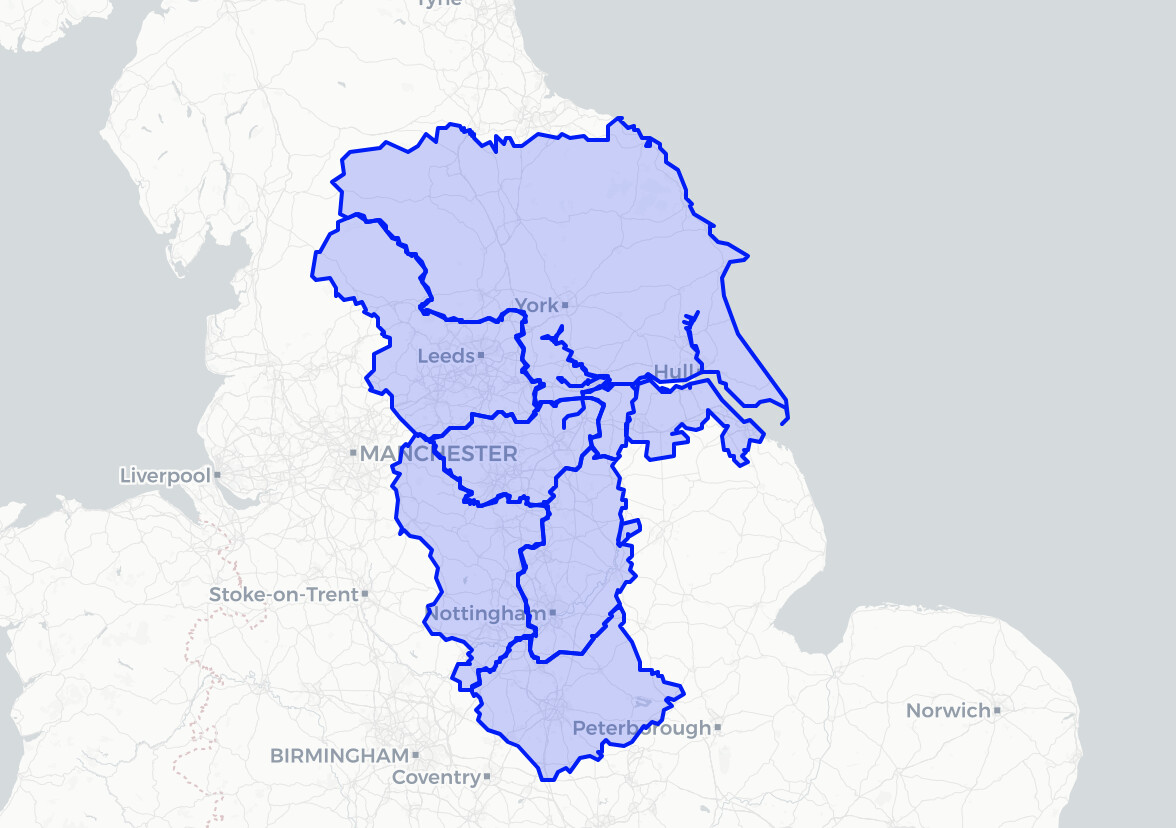
Across our area (covering two ICSs in the East Midlands), a shared application does exist—likely a Health Information Exchange or Clinical Portal also used in Yorkshire & Humber—but it’s clearly not being used consistently by all providers.
Map of the NHS “Danelaw” Single Patient Record?
Write (Care Coordination)
Interoperability on the “write” side is mixed:
- Within hospitals, patient care coordination is real-time and works well.
- Between hospitals and GPs, communication relies heavily on discharge letters, which is slow and inconsistent.
- In West Yorkshire, several hospitals extend real-time data exchange to GPs and community teams, but this isn’t the case in the two Midlands ICSs.
- We’ve been told that some “clinical notes” are effectively stuck within one hospital system—likely contributing to the lack of visibility mentioned above.
As a result, most care coordination still happens by phone, verbal updates, or relying on the family to relay crucial information.
And as a family, we struggle with being expected to give a complete “patient summary” to clinicians—something that shouldn’t fall on (elderly) patients or carers in the first place. We’ve created our own copy of the patient record using google drive.
Is This an Organisational / Sociotechnical Problem Rather Than a Technical One?
In many cases, yes. The technical foundations largely exist—the bigger issue is that people and organisations often lack awareness of the wider landscape.
As a carer, I’m seeing the problems directly, and with a technical background I can usually identify which standards are being used, or could be used. Mapping a use case to the right standard is fairly straightforward, especially once you understand the patient pathway. Most technical standards mirror real-world care coordination processes anyway.
For example, a nurse telling a social worker, “X has been discharged,” corresponds directly to the real-time ADT_A03 discharge message used in hospitals (this is not a discharge letter, it is an event notification). Similarly, sharing information like “X has bowel cancer, AF, and frailty” can be achieved through real-time event messages (write) or through shared data access (read)—and in practice, systems should probably support both.
From what I can see, the technology is largely ready. The harder challenges are organisational: adoption, alignment, and scaling the capabilities that already exist.
On the technical side, we lack a dedicated user group focused specifically on the space between organisations and the technologies that support patient care coordination across the NHS and Social Care. This gap means the conversation is often dominated by standards that are either EPR-centric (such as openEHR or PRSB) or very low-level technical standards (like HL7).
What’s missing is a forum that sits in the middle—connecting real care-coordination needs with practical technical solutions. Organisations such as INTEROPen or IHE might be well placed to help bridge this gap.